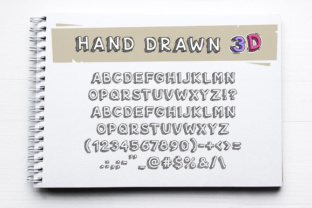
Hand Drawn 3D: A Fresh Approach to Visual Communication
Most digital visuals today feel polished to the point of impersonality. A perfectly rendered 3D model can look stunning, but it often lacks warmth, character, and the human touch that makes an audience pause. Hand drawn 3D bridges that gap. It blends the depth and dimensionality of three-dimensional art with the expressive, imperfect quality of hand-drawn lines and textures. The result is a visual style that feels both crafted and alive, and it is earning a strong following among creators, marketers, educators, and business owners who want their work to stand out without feeling cold.
Understanding what hand drawn 3D really offers—beyond just a look—can help you decide if it fits into your projects, your workflow, and your goals. Let’s explore the practical value, real-world applications, and honest considerations of working with this style.
What Makes Hand Drawn 3D Different
At its core, hand drawn 3D refers to 3D artwork that intentionally mimics the look of hand-drawn illustration. Instead of aiming for photorealistic lighting, smooth gradients, or flawless textures, the artist uses techniques that introduce sketch-like lines, uneven shading, textured surfaces, and even visible brush strokes. The 3D structure remains—objects still rotate, cast shadows, and occupy space—but the finish feels organic, as if drawn by hand on paper.
This hybrid approach offers a unique combination. You get the consistency and flexibility of 3D modeling—easy to re-angle, animate, or tweak color palettes—paired with the emotional resonance of traditional drawing. For professionals who work across multiple formats, this can be a strategic advantage. A single 3D model with a hand-drawn look can produce dozens of unique visuals without starting from scratch each time.
Practical Benefits That Go Beyond Aesthetics
One of the most immediate benefits of hand drawn 3D is the way it captures attention. In a crowded feed, presentation, or website, a slightly rough, hand-crafted image stands out against the sea of hyper-polished visuals. Audiences often perceive hand drawn elements as more honest, approachable, and trustworthy. For marketers and small business owners, this can mean better engagement and a stronger connection with viewers who are skeptical of overly produced content.
Another key advantage is flexibility. Because the hand drawn style relies less on realistic rendering, small inconsistencies are not flaws—they feel intentional. This tolerance for imperfection can save time during production. If a line wobbles or a shadow feels a bit loose, it fits the style. For freelancers and hobbyists working with limited resources, this reduces the pressure to achieve pixel-perfect results while still delivering professional-looking work.
Hand drawn 3D also supports clearer communication, especially in educational or instructional settings. Complex ideas—like a product mechanism, a building cross-section, or a biological process—can be clarified when illustration-style lines guide the eye. The hand-drawn quality helps signal that the visual is a simplified explanation, not a literal photograph. This reduces confusion and helps viewers focus on the core message rather than getting lost in visual noise.
Who Benefits Most From This Style
Different roles find value in hand drawn 3D for distinct reasons, but the thread that connects them is the need for visuals that feel human without sacrificing precision.
Marketers and Small Business Owners
For marketers, standing out is a constant challenge. Hand drawn 3D can make product mockups, social media graphics, and landing page illustrations feel distinctive and memorable. If you are promoting a brand that values craftsmanship, creativity, or authenticity, this visual language reinforces that message. A coffee brand, for example, might use hand drawn 3D product renders to suggest artisanal care. A tech startup might use it to soften the coldness of complex software. The style communicates effort and thoughtfulness without needing a bulky backstory.
Educators and Creators
Teachers, trainers, and content creators often need visuals that explain without overwhelming. Hand drawn 3D models of historical artifacts, scientific diagrams, or mechanical parts allow learners to rotate and examine objects from every angle, while the hand-drawn look keeps the image approachable rather than intimidating. A biology teacher could use a hand drawn 3D cell model that students can spin around, with each organelle clearly outlined like a textbook illustration. The learning experience becomes more interactive without sacrificing clarity.
Freelancers and Hobbyists
For freelancers working in illustration, animation, or graphic design, hand drawn 3D opens up new creative possibilities without requiring expensive software or extended rendering times. Many 3D tools now support non-photorealistic rendering presets that achieve this look with minimal tweaking. This means you can produce high-quality, style-consistent artwork faster than with traditional drawing. Hobbyists who enjoy 3D modeling but feel limited by the coldness of realistic renders find this style more forgiving and more expressive. It encourages experimentation—if a texture looks messy, it might look even better.
Real-World Use Cases and Examples
Seeing how others use hand drawn 3D can clarify how it might fit your own work. The following examples reflect practical applications across different fields.
- Product visualization. Instead of standard product photos, an online store uses hand drawn 3D renders of furniture. Each piece can be shown from multiple angles in a consistent style. The images feel artistic and unique, which helps the brand stand out among competitors using generic photography.
- Explainers and whiteboard videos. An educational YouTube channel uses hand drawn 3D animations to illustrate how a car engine works. Because the visuals look sketch-like, viewers understand that they are seeing a simplified model, not an actual engine. This reduces cognitive load and makes the explanation easier to follow.
- Presentation decks and pitch decks. A startup presents its concept to investors using slides with hand drawn 3D icons and diagrams. The visuals look fresh and custom, making the pitch feel more thoughtful than one built from stock assets. Investors often comment on the polished-yet-personal feel.
- Social media content. An Instagram feed dedicated to architectural concepts uses hand drawn 3D building models. The rough lines and subtle textures create a warm, inviting aesthetic that attracts followers interested in design, even if they are not architects themselves.
- Game assets and concept art. Indie game developers use hand drawn 3D characters and environments to give their games a distinctive visual identity. The style is less resource-intensive than realistic 3D and helps small teams create cohesive artwork faster.
Honest Considerations and Limitations
Hand drawn 3D is not a universal solution. It works best when the hand-crafted aesthetic aligns with your brand, audience, or message. If your project requires a sleek, ultra-modern, or highly realistic look, this style may feel too casual. Similarly, if your audience expects clean, medical-grade accuracy—such as in technical blueprints for construction—the textured, sketch-like finish might create confusion rather than clarity.
Learning to produce quality hand drawn 3D also requires some adjustment. Even with helpful presets, achieving a natural hand-drawn feel takes practice. Lines can look too digital if not tuned properly, and shading that is too uniform can break the illusion. Beginners should invest time in understanding lighting, line weight variation, and texture mapping. Starting with simple objects and gradually increasing complexity is a sensible approach.
Another consideration is tool selection. Not every 3D application handles non-photorealistic rendering well. Some popular choices include Blender with its Freestyle add-on, Cinema 4D with Sketch & Toon, and Procreate for iPad with 3D model import capabilities. Each has a learning curve, so evaluating your comfort level and budget before committing is wise. Many offer trial versions, which makes testing easier.
Finally, consider file size and performance. Hand drawn 3D scenes with many lines, textures, and strokes can be heavier to render than simple flat-shaded models. If you plan to run animations or interactive 3D on a website, optimization may be necessary. Exporting at reasonable resolutions and limiting stroke density can keep load times manageable.
How to Get Started With Hand Drawn 3D
If you are curious about trying hand drawn 3D yourself, start with a small project. Pick a single object you know well—a coffee cup, a plant, a book—and model it in your preferred 3D software. Then explore the non-photorealistic rendering settings. Adjust line thickness, add a subtle paper texture to the background, and experiment with color palettes that feel hand-drawn. Do not aim for perfection. The charm of this style lies in its humanity.
Study examples from artists who work in this space. Notice how they use uneven lines and variable shading to create depth without photorealism. Over time, you will develop an eye for what works and what does not. The best way to improve is to create regularly and compare your results to what inspires you.
For those who prefer to commission work, look for illustrators or 3D artists who specialize in non-photorealistic rendering. Share examples of the style you like and discuss how the final visuals will be used. Good communication prevents mismatched expectations and ensures the hand drawn 3D look serves your project goals.
A Thoughtful Addition to Your Visual Toolkit
Hand drawn 3D is more than a trend. It is a practical response to a growing desire for visuals that feel human in an increasingly digital world. Whether you are a marketer looking for a brand edge, an educator aiming for clearer explanations, or a creator wanting to express ideas more freely, this style offers a balanced blend of precision and personality. It is not the right choice for every project, but when it fits, it can elevate your work in ways that polished realism sometimes cannot.
Take the time to evaluate your audience, your message, and your resources. If authenticity, warmth, and versatility matter to your next project, hand drawn 3D deserves a serious look.